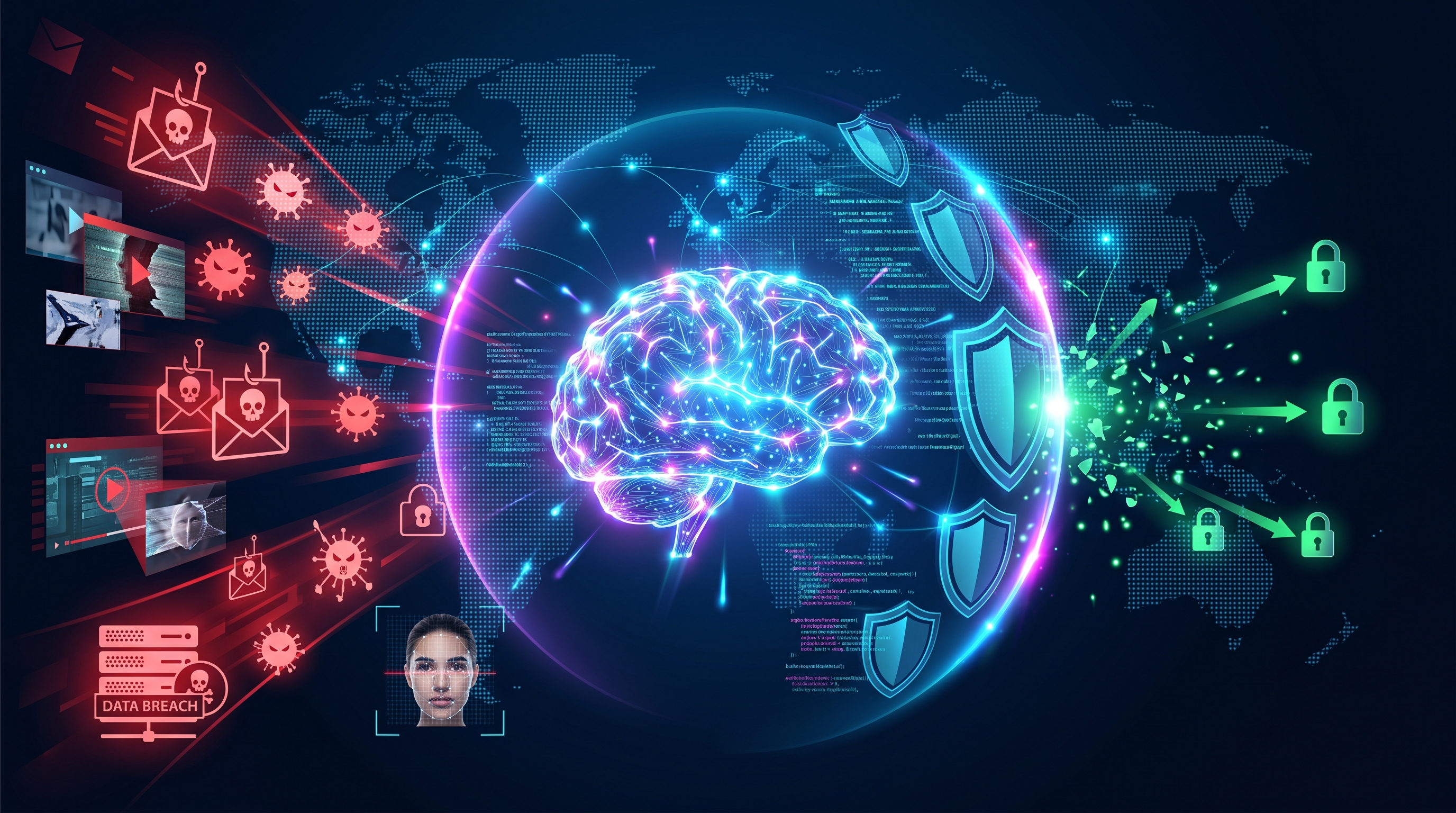
Cybersecurity in 2025 is defined by automation, artificial intelligence, and highly organized cybercrime operations. Attacks are faster, more targeted, and increasingly difficult to detect.
Ransomware in 2025: Smarter and More Destructive
Ransomware continues to be one of the most damaging cyber threats.
Key Trends
- Double and triple extortion (data encryption + data leakage threats)
- Ransomware-as-a-Service (RaaS) ecosystems
- AI-assisted victim targeting
- Increased focus on cloud and SaaS environments
Defense Strategies
- Immutable offline backups
- Zero Trust architecture
- Rapid patch management
- Network segmentation
Phishing & Social Engineering in the AI Era
Phishing remains the most common attack vector, now enhanced with AI-generated content.
Key Trends
- Highly personalized phishing emails using leaked data
- Deepfake voice and video impersonation (executive fraud)
- Messaging app phishing (SMS, WhatsApp, Slack-style attacks)
Defense Strategies
- Phishing-resistant MFA (FIDO2 recommended)
- Continuous employee security training
- AI-based email filtering
- Strong verification for financial requests
Zero-Day Exploits & Vulnerability Attacks
Zero-day vulnerabilities are exploited faster than ever.
Key Trends
- Rapid weaponization (hours after discovery)
- Targeting of VPNs, identity systems, and edge devices
- Increased supply chain exploitation
Defense Strategies
- Continuous vulnerability scanning
- Threat intelligence integration
- EDR/XDR deployment
- Least privilege access control
IoT & OT Security Risks
Connected devices expand the attack surface significantly.
Key Trends
- IoT devices used in botnets
- Attacks on industrial systems (OT environments)
- Weak default credentials remain widespread
Defense Strategies
- Network isolation for IoT devices
- Firmware update enforcement
- Strong authentication controls
- Behavioral monitoring
Insider Threats in Hybrid Work Environments
Insider risks remain difficult to detect and mitigate.
Key Trends
- Data theft via cloud platforms
- Credential misuse in remote environments
- Slow, long-term exfiltration attacks
Defense Strategies
- User Behavior Analytics (UBA)
- Role-Based Access Control (RBAC)
- Least privilege enforcement
- Regular access reviews
DDoS Attacks: Larger and More Adaptive
DDoS attacks are now more dynamic and financially motivated.
Key Trends
- Multi-vector attacks (network + application layer)
- Extortion-based DDoS campaigns
- AI-driven traffic adaptation
Defense Strategies
- Cloud-based DDoS protection
- Traffic filtering and anomaly detection
- CDN usage for resilience
- Incident response planning
Supply Chain Attacks: Hidden Entry Points
Supply chain compromise remains one of the most dangerous attack methods.
Key Trends
- Compromised software updates
- Vendor-based breaches
- CI/CD pipeline exploitation
Defense Strategies
- Vendor security assessments
- Software Bill of Materials (SBOM)
- Code signing verification
- Secure SDLC practices
Conclusion
Cybersecurity in 2025 requires continuous adaptation. Organizations must move from reactive defense models to proactive, intelligence-driven security strategies.
Security is no longer a one-time setup—it is a continuous operational process.

.png)


.png)