5 Signs It’s Time to Outsource Your IT to a Managed Service Provider: Key Indicators for Growing Businesses
As companies grow, internal IT often becomes overwhelmed, and outsourcing to an MSP can improve efficiency, security, and scalability.
.png)

.png)


April 22, 2026
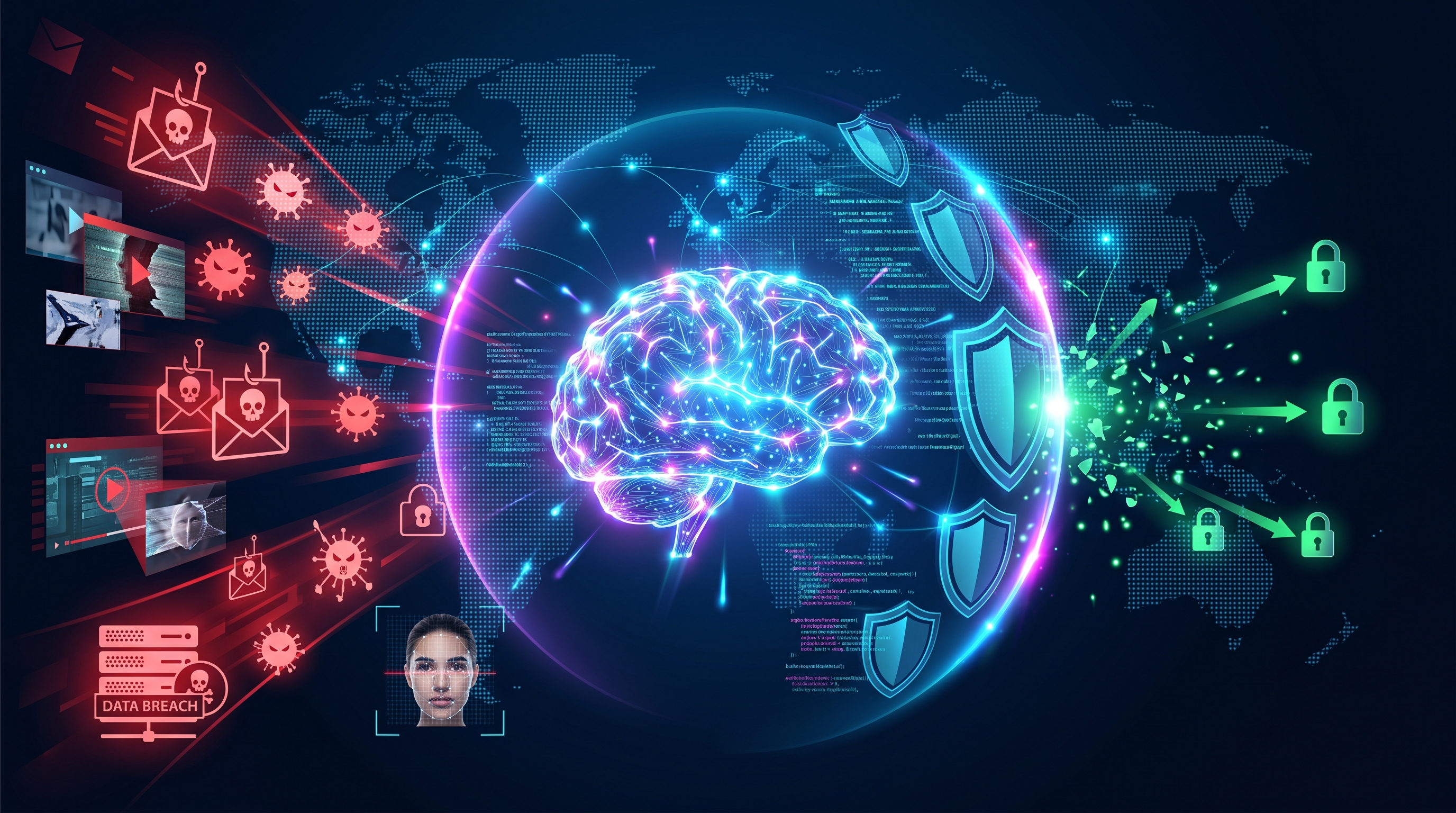
Artificial intelligence is no longer optional in cybersecurity—it’s becoming foundational. With AI-assisted attacks rising sharply and phishing campaigns increasingly generated by advanced models, organizations are facing a new reality: attackers are scaling faster than traditional defenses can keep up.
Recent data highlights the urgency:
The critical question is no longer if AI should be part of your security strategy—but how quickly you can implement it effectively.
Traditional security tools rely on predefined rules and signatures. AI-driven behavioral analytics shifts the focus to patterns.
By learning what “normal” looks like across users, devices, and networks, AI can:
Why it matters: Many modern attacks don’t trigger alerts because they appear legitimate on the surface.
Phishing emails are becoming more convincing due to natural language generation tools. Grammar mistakes and obvious red flags are disappearing.
AI-powered Natural Language Processing (NLP) helps by:
Why it matters: Human users alone can no longer reliably distinguish real from fake communication.
AI significantly reduces response time by automating detection and containment processes.
Capabilities include:
Studies indicate AI can reduce detection and response times by up to 108 days.
Why it matters: Speed is critical—delayed response increases breach impact and cost.
Security teams often face overwhelming volumes of vulnerabilities, many of which are low risk.
AI helps prioritize by:
Why it matters: Efficient prioritization allows teams to allocate resources where they matter most.
Deepfake-based attacks—especially in social engineering and fraud—are rapidly increasing, with some reports indicating +680% growth year-over-year.
AI detection tools can:
Why it matters: Executives and finance teams are increasingly targeted through voice and video impersonation attacks.
While adoption is growing, a critical gap remains:
This creates a new attack surface:
Key takeaway: Implementing AI without securing it introduces new vulnerabilities.
To stay ahead, organizations should focus on:
AI is reshaping both sides of cybersecurity—the attacker and the defender. Organizations that move quickly, but thoughtfully, will gain a measurable advantage in threat detection and response.